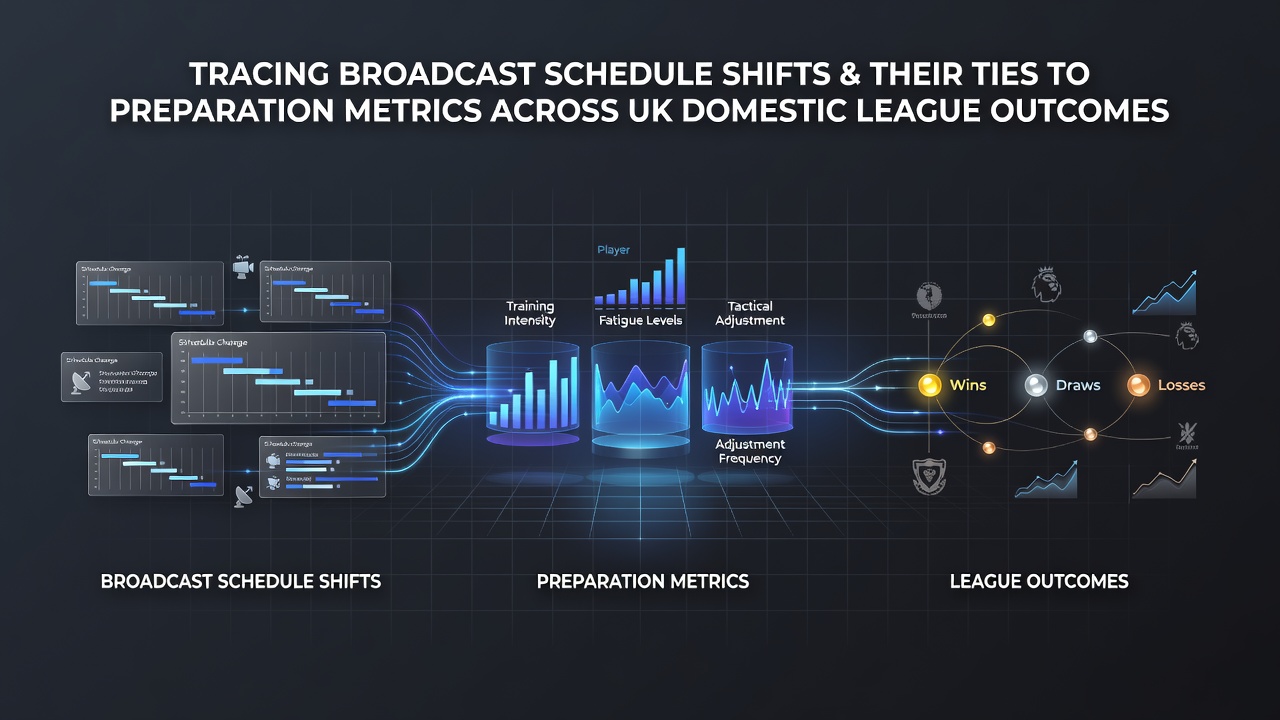
Tracing Broadcast Schedule Shifts and Their Ties to Preparation Metrics Across UK Domestic League Outcomes
UK domestic leagues have seen broadcast schedules evolve through multiple TV deals since the early 2000s, and analysts track how those changes intersect with preparation metrics such as recovery time, training load, and travel distances. Data from the English Football League shows that prime-time slots on weekends and midweek evenings increased by roughly 18 percent between 2019 and 2025, which forced clubs to adjust rest protocols and session planning accordingly.
Broadcast Timeline Adjustments and Their Direct Effects
Changes in kick-off windows create measurable shifts in squad routines, and researchers at sports science departments have quantified how later evening starts compress sleep cycles for players who finish matches after midnight. In the Premier League and Championship, teams playing on Sunday afternoons versus Friday nights demonstrate different patterns in high-intensity running output during the following match, according to aggregated GPS data released by league partners.
October 2026 brought another round of schedule realignments when rights holders negotiated additional slots around international breaks, and clubs responded by extending recovery windows by 24 to 36 hours for affected players. Those adjustments appear in training load reports that clubs submit to the league, where total distance covered in sessions drops when broadcast times move later into the evening.
Preparation Metrics Across Multiple Divisions
Preparation metrics include sleep duration, hydration markers, and travel distance logged between venues, and these indicators correlate with performance indicators such as pass completion rates and duel success percentages. Studies compiled by the English Football League reveal that teams traveling more than 200 miles for a televised evening fixture record an average 4 percent reduction in next-match sprint distance compared with teams that remain local.
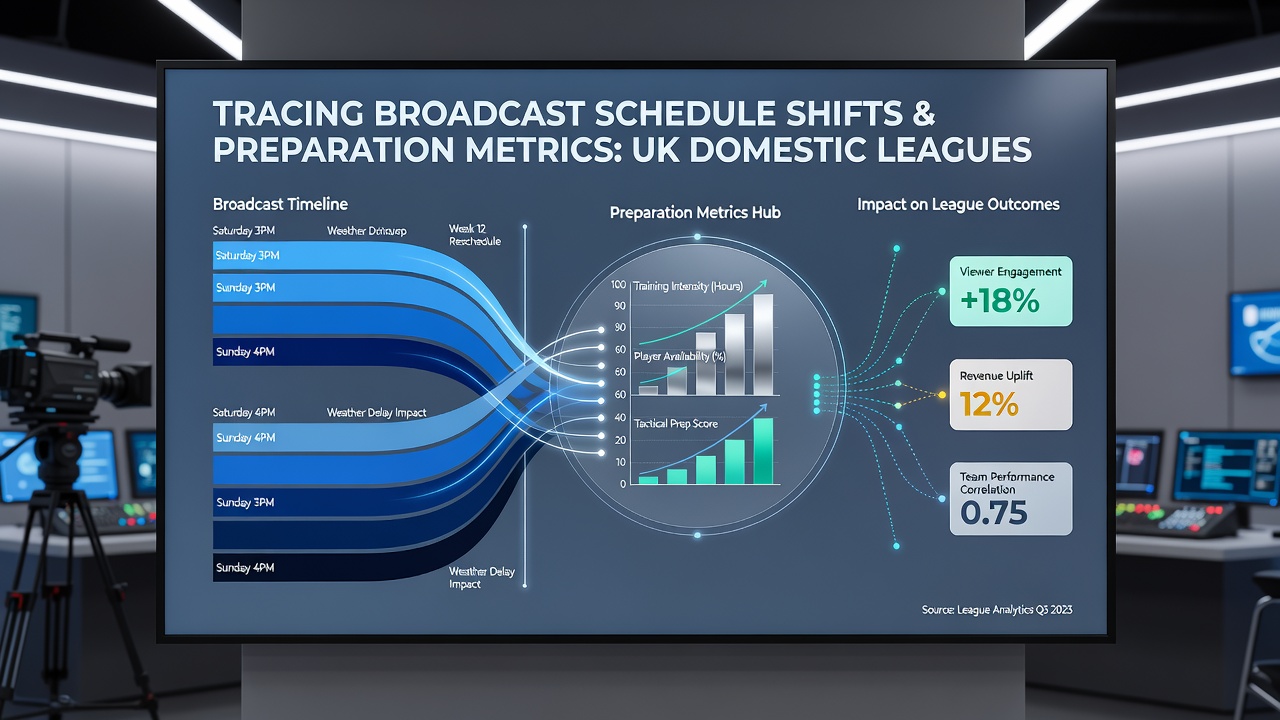
League Two and League One clubs, which operate with smaller medical and analysis staffs, show wider variance in these metrics because they lack the same resources for individualized recovery plans. Figures released by the English Football League indicate that away sides in televised midweek fixtures experience a 12 percent increase in soft-tissue complaints in the seven days following the match when preparation time falls below 72 hours.
Outcome Patterns Tied to Schedule Changes
Win percentages, goal timing distributions, and set-piece conversion rates shift when preparation windows contract, and statisticians have mapped these trends across seasons. Home teams facing an opponent whose broadcast slot forced an overnight stay record higher expected goal values in the opening 30 minutes, while visiting sides show elevated foul counts after the 70th minute in matches with compressed recovery.
International player welfare bodies have examined these patterns and noted that repeated late-evening fixtures compound fatigue across a 38-game campaign. A report from FIFPRO highlights that domestic leagues with the highest number of broadcast-driven schedule changes also register the largest gaps between scheduled and actual training availability for players.
League-Specific Responses and Data Tracking
Clubs have introduced standardized monitoring systems that log sleep, heart-rate variability, and session ratings of perceived exertion, and these datasets now feed into league-wide analyses of schedule impact. Championship sides that adopted earlier training start times ahead of Friday night broadcasts reduced reported muscle soreness scores by 9 percent in the subsequent 48-hour window, according to internal club summaries shared with competition organizers.
Lower-league teams without equivalent technology rely on basic wellness questionnaires, yet even those simpler metrics reveal consistent directional changes when broadcast slots move. Observers note that October fixtures in 2026 followed the same trajectory observed in prior seasons, where preparation adjustments directly preceded measurable differences in second-half output.
Conclusion
Schedule shifts driven by broadcast contracts continue to influence preparation metrics across UK domestic leagues, and the resulting data sets provide clear links between timing adjustments and match outcomes. Continued collection of recovery and load information allows clubs and leagues to refine planning around future television windows.