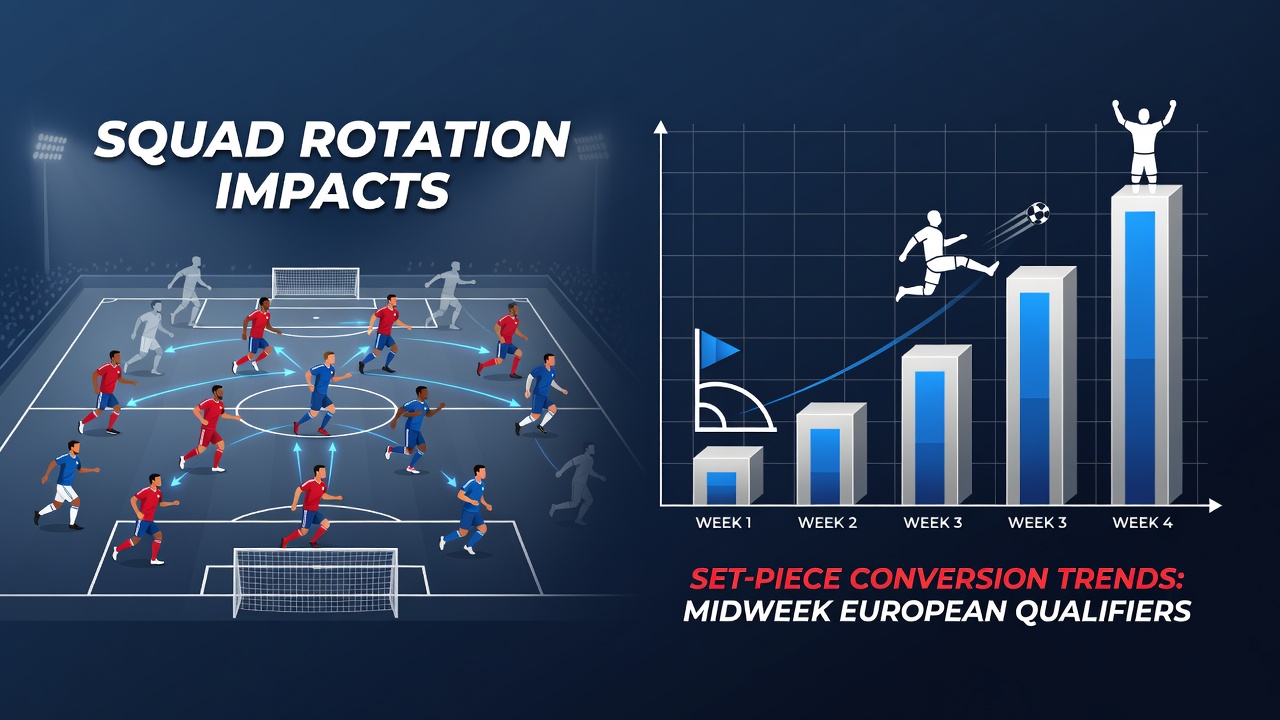
Squad Rotation Impacts on Set-Piece Conversion Trends in Midweek European Qualifiers
European qualifiers often pack multiple fixtures into tight windows, and teams respond by rotating squads to manage fatigue across back-to-back commitments. This approach alters the personnel available for set-piece duties, which in turn shifts conversion patterns recorded in official match data. Observers note that specialists who excel at delivery or aerial challenges sometimes sit out midweek games, leaving duties to players with different profiles and lower familiarity in those roles.
Fixture Demands Shape Rotation Decisions
Qualifying campaigns feature clusters of matches separated by just a few days, so coaches adjust lineups to protect key assets ahead of domestic schedules. Data from recent cycles shows rotation rates climbing above 30 percent in midweek slots compared with weekend fixtures, according to aggregated UEFA technical summaries. Those changes frequently remove primary corner takers or free-kick specialists, which then affects the quality of delivery into the box.
When teams rest established set-piece experts, replacement players tend to produce lower conversion percentages on both attacking and defending phases. Records indicate that corners taken by rotated squads convert at rates roughly 4 to 6 percentage points below season averages, while headed clearances drop in accuracy when central defenders receive rest. These shifts appear consistently across groups that face congested calendars.
Statistical Patterns in Conversion Rates
Tracking platforms covering European qualifiers reveal that set-piece goals per 90 minutes decline during midweek rounds when rotation exceeds typical thresholds. The same datasets show an uptick in set-piece attempts that fail to test goalkeepers, often because delivery lacks the usual precision or because attacking runs are less synchronized. Researchers tracking these metrics point to reduced training time between matches as a contributing factor, since new combinations receive fewer repetitions on the training pitch.
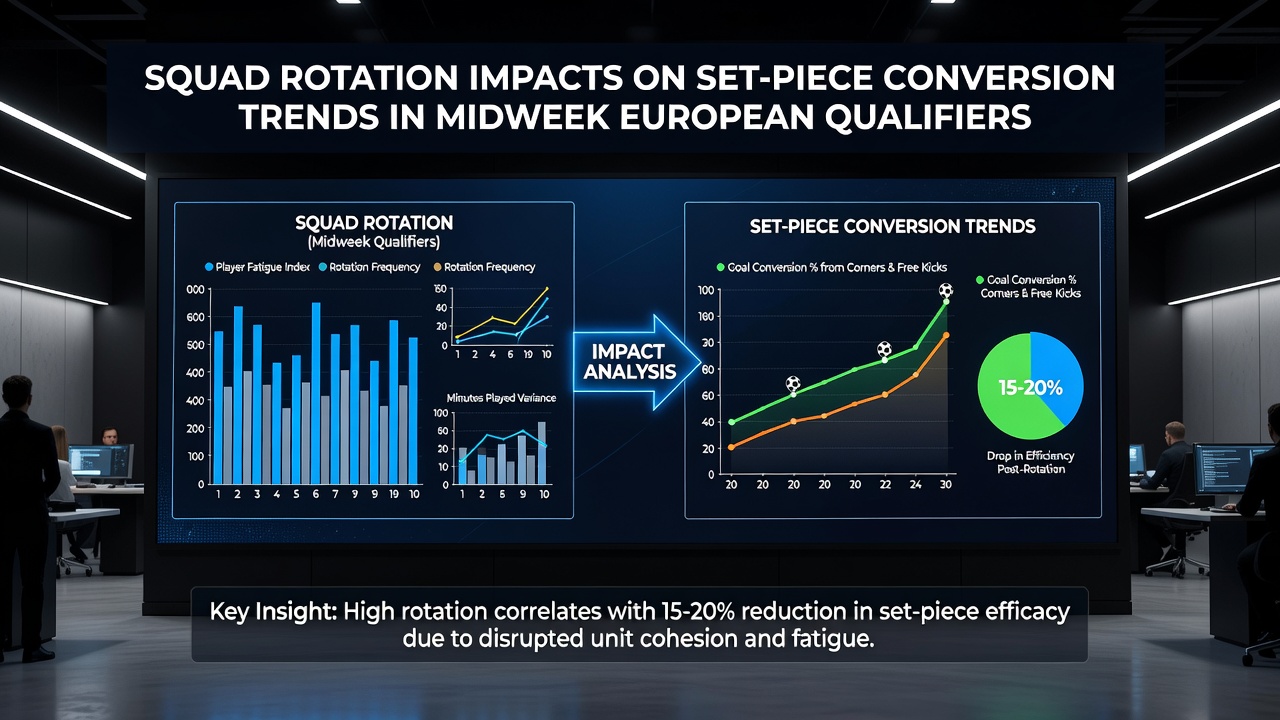
Teams that maintain core set-piece units despite rotation elsewhere post steadier numbers. In September 2026 qualifiers, several sides that preserved their primary delivery options while rotating midfielders and full-backs recorded conversion figures within one percentage point of their overall campaign average. This pattern suggests targeted preservation of specialists can mitigate some negative effects associated with broader squad changes.
Examples from Recent Qualifying Windows
One group stage campaign featured a nation that rotated its entire back line for a midweek fixture after a weekend league match. Set-piece goals conceded rose from 0.4 per game to 1.2 in that single outing, with most opportunities stemming from poorly timed zonal assignments. The following fixture saw the regular defensive unit restored, and the concession rate returned to prior levels.
Another case involved a side that introduced a new corner routine involving two rotated attackers. Initial attempts produced zero goals across three matches, yet once the routine received additional practice the conversion rate climbed back toward the group norm. These instances illustrate how rotation can temporarily disrupt established patterns before adjustments occur.
Training and Preparation Factors
Clubs and national teams allocate fewer hours to set-piece work when recovery days shrink between fixtures. Sports science reports from the Australian Institute of Sport highlight that reduced repetition correlates with measurable drops in execution accuracy for both attacking deliveries and defensive organization. European sides facing similar constraints show parallel trends in match footage analysis.
Opposition scouts have started cataloguing rotation patterns to anticipate which set-piece threats might be absent. This information feeds into pre-match planning, sometimes leading to adjusted marking schemes that further influence conversion statistics. The interplay between rotation, preparation time, and opponent awareness creates layered effects that appear in final match reports.
Conclusion
Rotation during midweek European qualifiers directly influences set-piece conversion by altering personnel and preparation time. Data compiled across multiple campaigns shows measurable shifts in both attacking success and defensive resilience whenever key specialists receive rest. Teams that limit changes to non-specialist positions maintain more consistent figures, while broader rotations produce temporary declines that recover once regular units return. These trends continue to shape preparation strategies as qualifying schedules remain compressed.