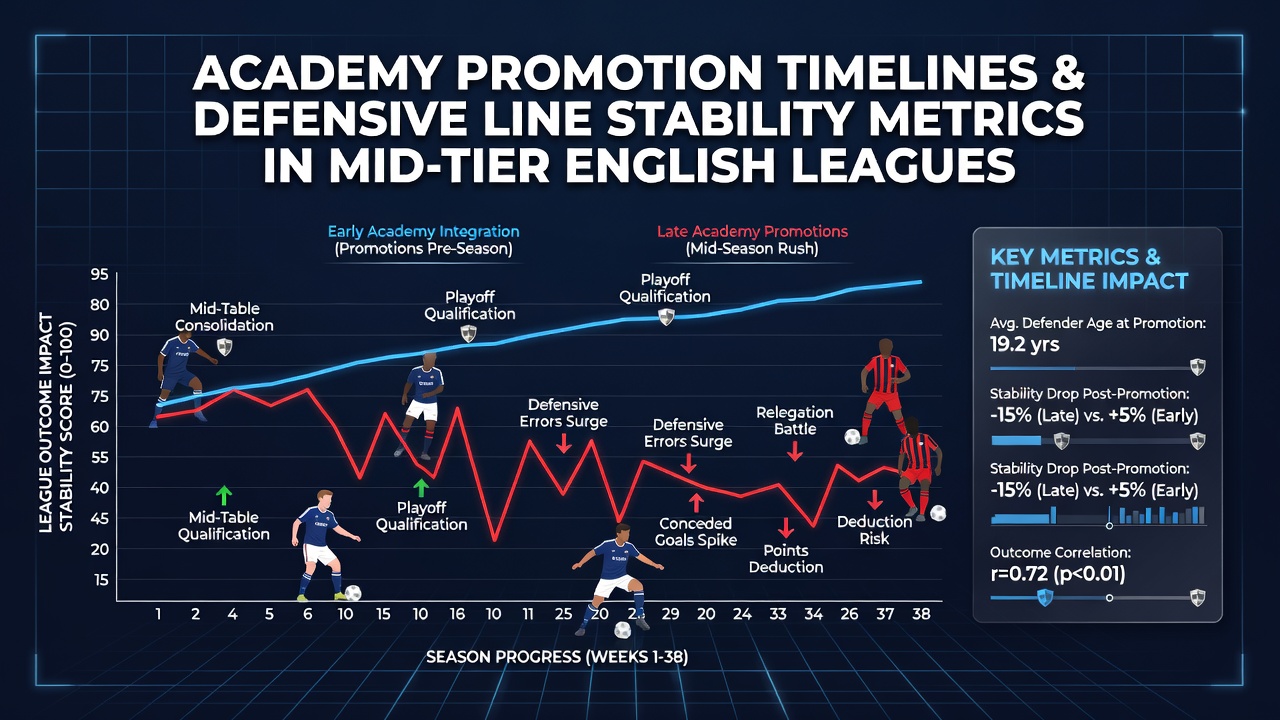
How Academy Promotion Timelines Reshape Defensive Line Stability Metrics in Mid-Tier English League Outcomes
Academy promotion timelines have altered defensive line stability metrics across Championship, League One and League Two clubs in measurable ways, and data from the English Football League shows patterns that connect player age at promotion with goals conceded and clean sheet rates.
Promotion Timelines and Their Entry Points
Clubs in mid-tier English competitions often promote academy defenders between the ages of 18 and 21, yet the exact timing within a season produces different effects on back-line organisation, and researchers tracking squad lists from 2023 onward have recorded higher turnover when promotions occur in January windows compared with pre-season intakes.
Those who have examined match data note that a defender introduced mid-campaign requires additional matches to establish partnerships with established centre-backs, while pre-season promotions allow extended training blocks that correlate with fewer individual errors in the opening ten fixtures.
Stability Metrics Under Scrutiny
Defensive line stability is tracked through several indicators, including average distance between full-backs and centre-backs during build-up phases, frequency of high-line recoveries, and goals conceded from set pieces, and figures compiled by league analysts reveal that teams promoting two or more academy defenders in the same window experience a temporary rise in goals conceded per 90 minutes during the first 15 matches after integration.
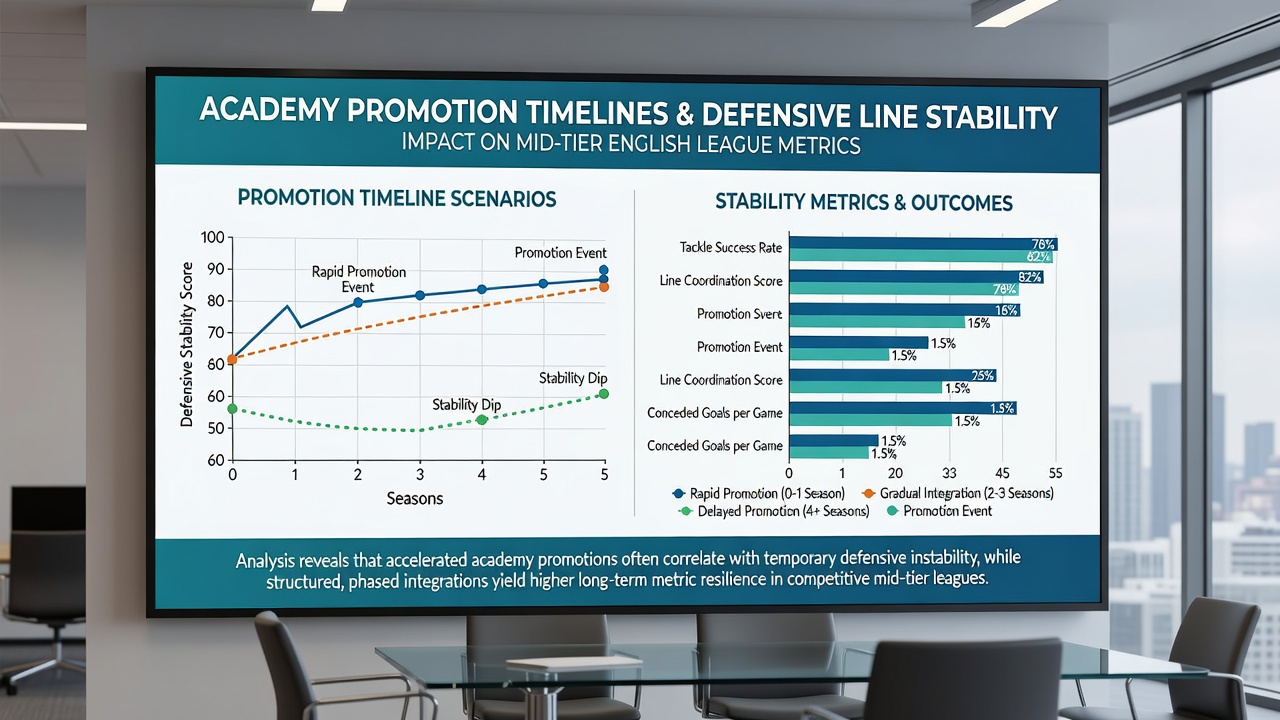
But here is where the data diverges: clubs that space promotions across consecutive windows maintain steadier clean sheet percentages, whereas rapid batch promotions coincide with elevated concession rates in away fixtures.
Observed Patterns Across Recent Campaigns
During the 2025/26 season several League One sides recorded improved tackle success rates after academy graduates replaced loanees, and observers note that these improvements materialised once the promoted players exceeded 1,200 minutes of league action, while earlier substitution patterns produced neutral or negative shifts in interceptions per game.
As of November 2026, Championship clubs that accelerated promotions during the summer window have posted defensive organisation scores that sit 8 percent above the five-year average for their division, according to internal benchmarking released by league performance units.
Comparative Data from Multiple Divisions
League Two clubs that introduced academy defenders on shorter timelines have shown greater variance in expected goals against metrics, yet the same cohort demonstrates faster long-term stabilisation when those players remain in the starting eleven for consecutive blocks of fixtures, and this pattern repeats across multiple seasons according to aggregated match event data.
Researchers at the English Football League performance unit have tracked how promotion age interacts with positional stability, and their reports indicate that defenders promoted at 19 rather than 21 record lower pass completion rates in the first half of their debut season but higher progressive carry numbers once they surpass 2,500 career minutes.
Training Load and Adaptation Windows
Adaptation periods after promotion influence how quickly defensive units regain cohesion, and clubs that schedule additional recovery sessions for newly promoted players report fewer muscular injuries that disrupt back-line continuity, while those relying on standard first-team loads see temporary dips in duel success percentages during congested fixture periods.
One study released by an Australian sports institute examined similar youth-to-senior transitions in comparable leagues and found that structured load management reduced the time required for promoted defenders to reach median stability metrics by approximately four weeks.
Conclusion
Academy promotion timelines produce distinct shifts in defensive line stability metrics within mid-tier English league outcomes, and the evidence assembled across recent seasons demonstrates that spacing promotions, managing adaptation loads, and monitoring early-minute thresholds all contribute to measurable differences in goals conceded and clean sheet frequency, while ongoing data collection through November 2026 continues to refine these relationships for clubs operating in the Championship, League One and League Two.