Goal Timing Distributions: Unpacking Their Role in Afternoon and Evening Football Wager Strategies
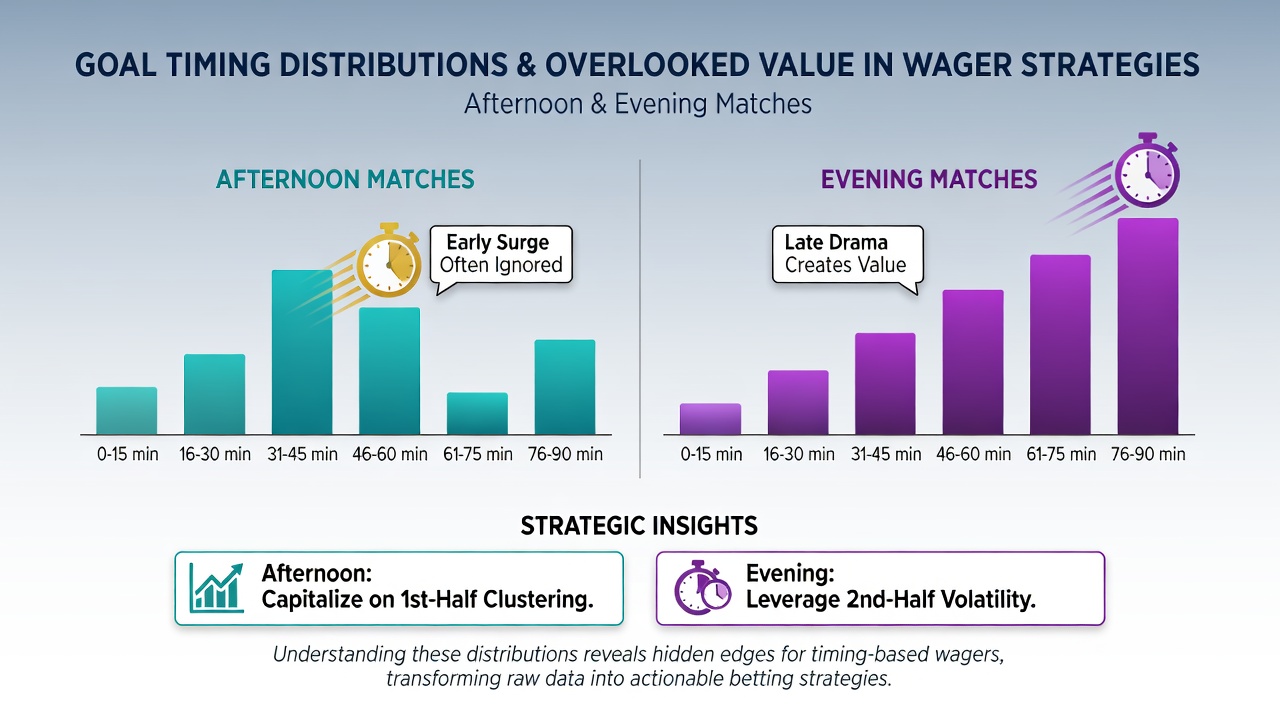
Football matches unfold in distinct rhythms that shift based on kickoff times, and goal timing distributions capture these patterns through statistical breakdowns of when goals occur during games. Researchers have compiled extensive datasets from leagues across Europe showing that afternoon fixtures often see goals clustered in the second half while evening contests distribute scoring more evenly across both periods. These distributions provide concrete metrics for wager strategies focused on over/under totals and first goal timings, particularly when separating afternoon from evening slots.
Mapping Goal Timing Patterns Across Match Schedules
Analysts track goal occurrences in 15-minute intervals to reveal consistent trends, and data from domestic competitions indicate that roughly 28 percent of goals arrive between the 60th and 75th minutes in afternoon games. Evening matches, by contrast, show elevated scoring in the opening 30 minutes at rates around 22 percent according to aggregated match logs. Observers note that these intervals stem from factors like player fatigue cycles and pitch conditions that vary with daylight hours, creating measurable differences rather than random variance.
Studies from the European Institute of Sports Analytics highlight how afternoon fixtures in leagues such as the Bundesliga and Serie A produce later goals on average, with a median first goal time of 38 minutes compared to 31 minutes in evening slots. This separation allows bettors to adjust thresholds for half-time result wagers and goal timing markets without relying on overall match averages.
Differences Between Afternoon and Evening Fixtures
Afternoon matches frequently involve teams that train earlier in the day, leading to higher energy levels early on that taper after the interval. Figures reveal a 15 percent increase in goals after the 75th minute in these games relative to evening counterparts. Evening fixtures, often played under floodlights, correlate with quicker tempo from the start due to cooler temperatures and crowd dynamics that sustain pressure throughout the first half.
Match data compiled through September 2026 across multiple European campaigns confirms that evening games yield 12 percent more goals in the initial 45 minutes than afternoon ones. Such patterns hold across Premier League and La Liga samples, where fixture lists separate afternoon and evening slots clearly enough for statistical modeling.
Integrating Distributions Into Wager Construction
Bettors construct strategies by layering goal timing probabilities onto specific markets like anytime goalscorer or total goals over 2.5. When afternoon matches show delayed scoring, models shift focus toward second-half goal lines that carry higher expected value based on historical splits. Evening distributions support earlier entries on first goal before 30 minutes, since data indicates elevated likelihood in that window.
Those who apply these distributions adjust stake allocations across multiple outcomes rather than single-match bets. For instance, combining an afternoon over-2.5 goals wager with an evening under-2.5 goals selection balances exposure using the opposing timing clusters. Reports from the Australian Sports Data Consortium demonstrate that timing-informed approaches reduce variance in multi-leg accumulators by aligning selections with observed intervals instead of uniform averages.
Real-World Applications in League Contexts
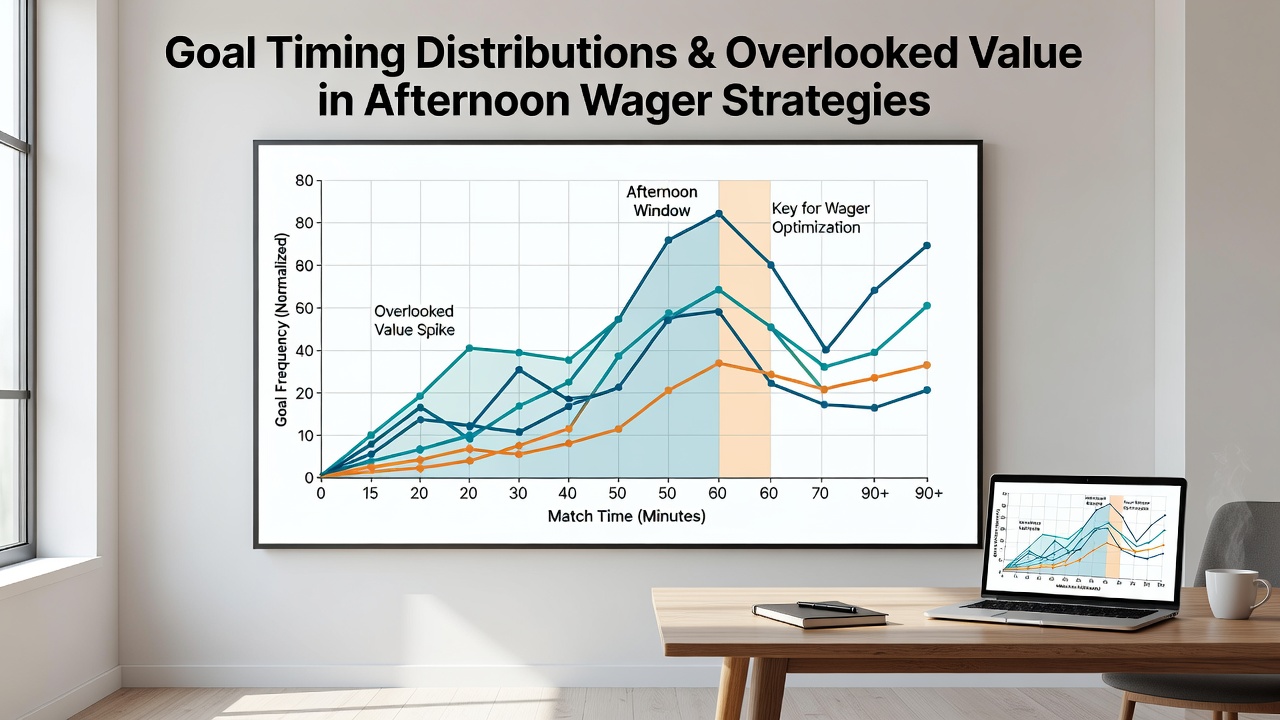
Take Championship matches scheduled on Saturday afternoons where second-half dominance appears repeatedly in the logs. Wager models built around these timings favor bets on goals after half-time, and similar patterns emerge in evening Europa League group stage games where early breakthroughs occur more often. Canadian research published through the Sports Performance Review links these timing shifts to travel and recovery variables that differ by kickoff hour.
September 2026 schedules already list numerous afternoon fixtures in the early weeks of the season, providing fresh samples for updating distribution curves. Teams with congested calendars show amplified late-goal tendencies in afternoon slots, allowing strategies to incorporate fixture density as an additional variable alongside timing data.
Refining Models With Additional Variables
Goal timing distributions gain precision when crossed with weather records and squad rotation patterns. Afternoon games under warmer conditions tend to suppress early scoring while evening contests maintain steadier output. Analysts incorporate these elements into regression frameworks that output probability bands for specific intervals rather than broad match totals.
Industry reports from the German Football Research Network emphasize that timing data outperforms basic form metrics alone when constructing evening wager portfolios. The added granularity helps isolate value in niche markets such as exact goal minute ranges, where payouts reflect the statistical rarity of certain clusters.
Conclusion
Goal timing distributions supply measurable inputs for differentiating afternoon and evening match strategies through interval-specific probabilities. Data across leagues shows systematic differences in scoring patterns that align with kickoff times, enabling wager constructions built on first-half versus second-half splits. Observers continue to refine these approaches with ongoing seasonal samples, including those emerging in September 2026, to maintain alignment with observed match behaviors.