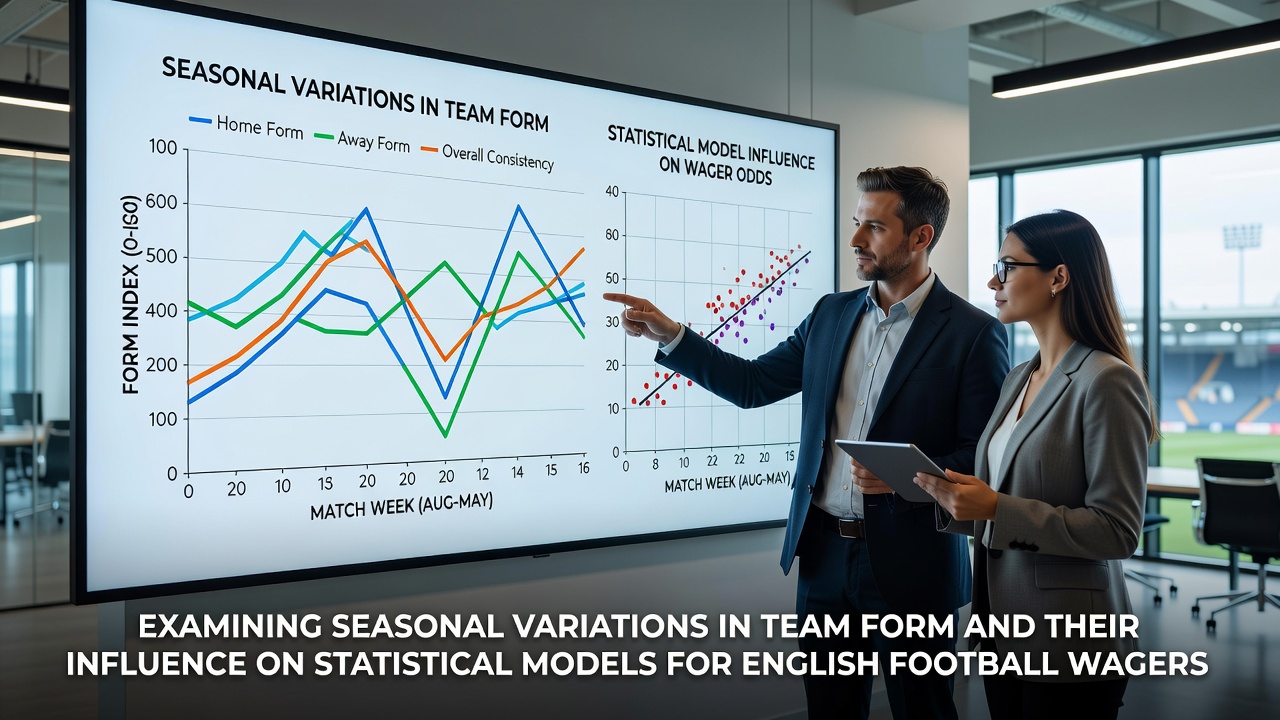
Examining Seasonal Variations in Team Form and Their Influence on Statistical Models for English Football Wagers
Seasonal shifts shape team performance across English football divisions, and analysts track these patterns through detailed performance data that feeds directly into predictive models used for wagering markets. Researchers have documented how form fluctuates from the opening weeks of August through the winter months and into the spring run-in, with clear effects on metrics such as goals scored, clean sheets, and points per game.
Patterns Across the Campaign Calendar
Teams in the Premier League and Championship often record different results depending on the month, since weather, fixture density, and squad rotation all interact. Data from the 2024-2025 season showed higher average goals per match in the first eight weeks compared with the period from November to January, while recovery rates after midweek European fixtures dipped noticeably in February and March. Observers note that newly promoted sides frequently post stronger home records early in the campaign before away form declines as the season lengthens.
These recurring trends appear across multiple divisions, and statisticians incorporate month-specific adjustments into regression models so that predicted outcomes reflect historical tendencies rather than treating every match as a uniform event. When August fixtures arrive, models must account for pre-season preparation time and the absence of European commitments for most domestic sides, factors that alter expected goal differentials until the first international breaks occur.
Integration into Predictive Frameworks
Statistical models for English football wagers rely on large datasets that segment performance by quarter of the season. Analysts apply time-weighted variables that assign greater influence to recent results while still recognizing that certain clubs maintain elevated win rates during specific windows. For instance, mid-table sides have historically collected more points from December fixtures than from their May schedule, and models adjust probability outputs accordingly before odds are set.
External variables such as pitch conditions and travel distance compound these seasonal effects, leading developers to test model accuracy against hold-out data from previous years. Figures released by the Australian Sports Commission highlight similar temporal patterns in other football leagues, confirming that seasonal segmentation improves forecast calibration across competitions.

Effects on Market Pricing and Model Updates
Betting markets respond when models detect deviations from expected form curves, particularly around the January transfer window when squad changes reset many statistical baselines. In the lead-up to August 2026, when the 2026-27 Premier League campaign begins, analysts will compare opening-weekend results against multi-year benchmarks to recalibrate inputs for goal expectancy and clean-sheet probabilities. This process repeats after each round of matches, with algorithms reweighting variables to capture whether early-season overperformance is sustainable or simply a temporary spike.
Studies published through the University of Nevada's sports analytics program demonstrate that models ignoring seasonal form adjustments produce larger errors in projected totals during the winter period, whereas those that include month-by-month coefficients maintain tighter confidence intervals throughout the year. Such refinements help markets remain aligned with observed outcomes rather than relying on static season-long averages.
Conclusion
Seasonal variations in team form supply essential signals that statistical models translate into updated probabilities for English football wagers. By segmenting data across the campaign calendar and refreshing coefficients after key periods such as the summer transfer window, analysts maintain alignment between historical patterns and current conditions. As the 2026-27 season approaches, these time-sensitive adjustments will continue to shape how models interpret results and how markets price individual matches.