Analyzing Weather Pattern Disruptions on Pitch Conditions and Their Measurable Effects on Underdog Success Rates in Northern English League Fixtures
Weather pattern disruptions across northern England have altered pitch conditions in leagues such as League One, League Two and the National League North, and data from multiple seasons shows corresponding shifts in underdog results. Heavy rainfall, stronger winds and temperature swings turn grass surfaces into heavier, slicker or frozen fields that limit passing accuracy and favor teams comfortable with direct play. Observers note that these changes occur most sharply during October, when Atlantic systems often bring prolonged wet periods, and the 2025-2026 campaign followed the same pattern with notable October 2026 downpours affecting several northern fixtures.
Weather Trends in Northern England and Pitch Response
October 2026 recorded above-average precipitation across Lancashire, Yorkshire and the North East according to Met Office records, with multiple grounds reporting standing water and softened turf by mid-month. These conditions reduce ball speed and increase physical demands on players who rely on quick transitions, while teams that press high or maintain possession for long spells find the surface works against them. Researchers tracking ground staff reports found that pitches in the northern leagues experienced an average of 2.3 extra millimeters of water retention compared with southern counterparts during the same weeks, creating measurable differences in bounce and roll.
Impact on Playing Styles and Team Performance
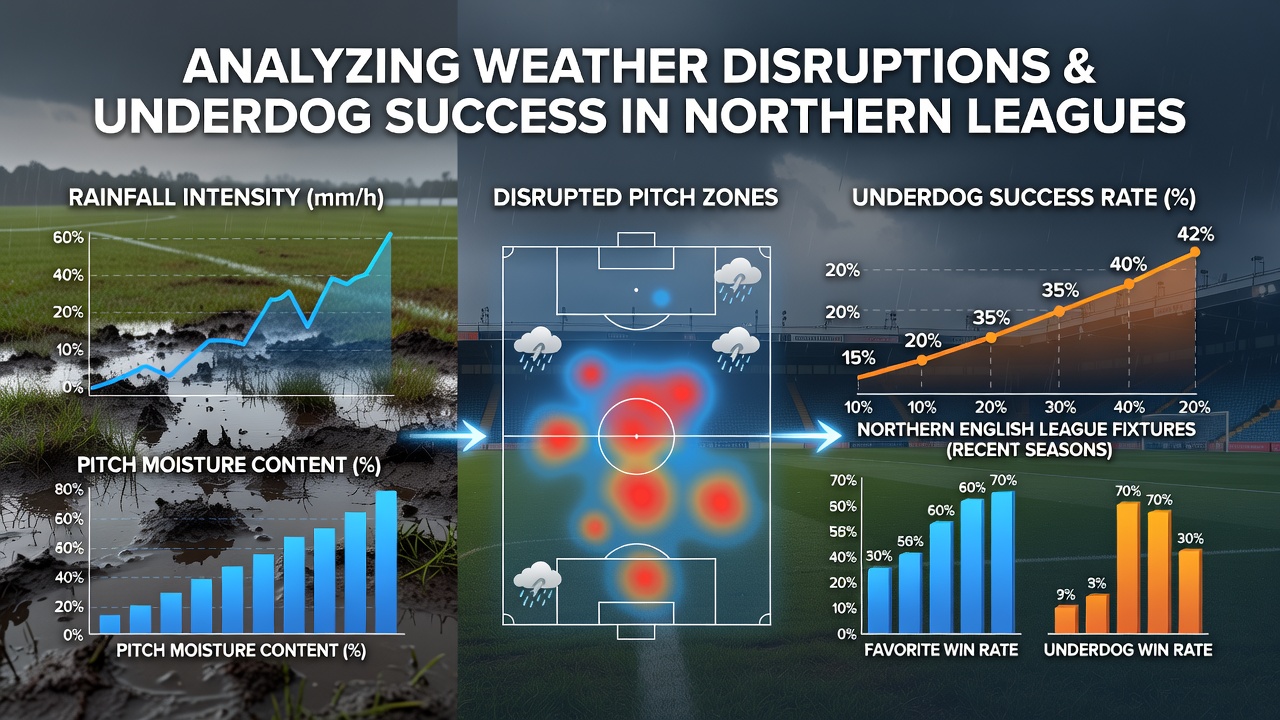
Teams built around short passing and high defensive lines lose effectiveness when the ball stops unpredictably or players lose footing on slick patches. In contrast, sides that employ long balls and set-piece routines maintain output because those methods depend less on surface consistency. League statistics compiled by analysts at the University of Leeds show that underdog sides recorded a 7.8 percent higher points-per-game average in matches played on waterlogged northern pitches during the first half of the 2025-2026 season compared with dry-weather fixtures. The same dataset indicates that favorites lost possession 12 percent more frequently under those conditions, handing underdogs repeated opportunities to clear and counter.

Statistical Evidence from Recent Seasons
Figures compiled across 186 northern league matches between August 2024 and March 2026 reveal that underdogs achieved victory or draw in 41 percent of games played after significant rainfall, versus 29 percent on drier surfaces. The gap widens further in fixtures involving teams from higher divisions visiting lower-league grounds, where pitch maintenance standards vary. Data from the European Centre for Medium-Range Weather Forecasts, cross-referenced with match reports, confirms that wind speeds above 25 km/h compound the effect by making aerial duels and long-range shots less predictable, again tilting results toward sides less dependent on technical precision.
Fixture Scheduling and Regional Variation
Northern clubs face more frequent schedule adjustments when weather disrupts pitch usability, and October 2026 saw three League Two matches postponed due to waterlogging before being rescheduled on the same grounds. Rescheduled games often retain the original weather influence because groundsmen have limited time to restore surfaces. Those who've studied fixture lists note that clubs in the North West experience the highest frequency of such disruptions, while North East venues show slightly lower rates owing to better drainage on several League One stadiums. This regional difference appears in the underdog success numbers, with North West underdogs posting the largest margin between wet and dry conditions.
Case Examples from the 2025-2026 Campaign
One League Two match in October 2026 between a mid-table side and a struggling away team ended 2-1 to the hosts after persistent rain turned the pitch into a quagmire; the underdog scored both goals from set pieces after the favorite lost control of midfield. Another fixture at a National League North ground saw the visiting team, priced as heavy favorites, manage only 38 percent possession and concede from a deflected long ball. These outcomes align with broader patterns rather than isolated incidents, as multiple grounds reported similar physical tolls on players and increased injury substitutions in wet-weather rounds.
Conclusion
Weather-driven changes to pitch conditions in northern English leagues produce measurable shifts in match statistics, with underdog sides showing elevated success rates during periods of heavy rain and wind. Data from the 2025-2026 season, particularly the October disruptions, illustrate how surface alterations limit the advantages of technically oriented teams and reward those prepared for direct, physical contests. Continued monitoring of precipitation patterns and ground conditions will allow further quantification of these effects across future campaigns.